
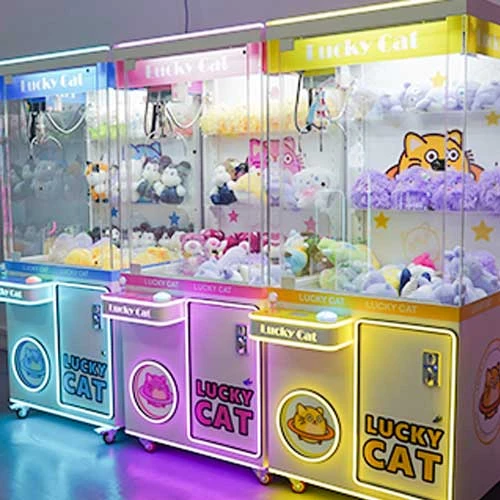
A claw machine earns money while you’re not watching it. That’s the appeal. But the gap between a machine that pays for itself in six weeks and one that collects dust next to the emergency exit comes down to a few decisions you make before the container ship leaves the factory.
Want the same math for your own venue? Run your own numbers with the ACS ROI Calculator — free, no sign-up.
Here’s what the numbers actually look like.
What a Commercial Claw Machine Earns: Baseline Numbers
Revenue depends on four inputs: price per play, plays per day, payout rate, and prize cost. Remove the guesswork:
- Price per play: $0.75–$2.00 (higher in card-only venues)
- Average-traffic location: 40–80 plays/day
- High-traffic location (mall anchor, FEC entrance): 100–200+ plays/day
- Gross monthly revenue, average venue: $900–$4,000 per machine
- Gross monthly revenue, high-traffic venue: $3,000–$9,000 per machine
Prize cost runs 20–35% of gross when managed properly. Electricity adds $15–$30/month. What’s left is operating margin before any debt service on the machine.
Worked Payback Example
A 40-inch commercial claw machine landed and imported typically runs $2,200–$3,500 depending on spec; for context across other cabinet types, see current price ranges by machine category. Use a mid-range figure:
- Machine cost (landed, duties included): $3,000
- Daily plays: 70
- Price per play: $1.00
- Monthly gross: $2,100
- Prize cost (28%): $588
- Operating costs: $25
- Net monthly: ~$1,487
- Payback period: ~2 months
At a conservative 40 plays/day the same machine nets ~$720/month — payback in just over four months. In a well-placed spot, you’re typically looking at full cost recovery before your first quarterly review.
The Four Variables That Actually Move ROI
1. Payout Rate Control
Every serious commercial claw machine allows operators to set an electronic strength cycle — how often the claw grips at full strength. This is standard industry practice, not a trick. Most operators run 1-in-6 to 1-in-10 depending on prize value. A machine without this feature isn’t a commercial unit; it’s a toy.
2. Coin vs. Card Payment
Venues that add card-swipe capability to coin-only machines report 20–40% revenue increases. Younger players don’t carry coins. If your supplier can’t provide a dual-payment unit or a retrofit kit, that’s a missing revenue ceiling, not a minor spec gap.
3. Machine Placement
Position near entrances, food courts, or cinema exits consistently outperforms back-of-venue placement by 2–3x in plays per day. The machine doesn’t change. The foot traffic does. Get the placement right before you worry about anything else. If you are still deciding which format belongs where, our guide to matching a prize machine for sale to the right venue maps each spot to the machine that earns most there.
For the full range this ROI model applies to, see our commercial claw machine for sale range, built for FEC and mall operators.
4. Prize Cost Management
Low-cost plush at 15–20% of play value gives you the best margin. Branded or licensed merchandise can lift play frequency but compresses margin. Match prize selection to your customer age range — misjudging this is the most common reason a claw machine underperforms its location potential.
Specs That Separate Commercial Grade from Consumer Grade
Under 30 plays/day, almost anything holds up. At 100+ plays/day in a busy FEC, corner-cut units fail within months. Verify these before you order:
- Frame: Heavy-gauge steel construction — not sheet metal, especially around door hinges and base corners
- Motor rating: Industrial-grade claw motor with thermal protection; consumer motors burn out under sustained load
- Voltage: 110V/220V switchable — critical for operators across multiple markets
- Payout control: Electronic strength adjustment, accessible without opening the cabinet
- Parts availability: Ask the supplier directly: can you ship a replacement control board within two weeks? If they hesitate, factor downtime into your ROI model
FAQ
How long does it take for a claw machine to pay for itself?
In a mid-traffic venue at $1.00/play and 60 plays/day, typically 3–5 months. In a high-traffic anchor position, 6–8 weeks is realistic. Poor placement is the most common reason payback takes longer than projected.
What’s a realistic monthly revenue figure for a single claw machine?
$1,000–$3,500 net after prize costs for most commercial locations. High-traffic placements can exceed $6,000/month gross. Budget conservatively at $800–$1,200 net when projecting for a new venue.
Does the brand of claw machine matter?
Build quality and parts availability matter more than brand name. A machine from a manufacturer who stocks spare parts and offers remote technical support will outperform a better-looking unit from a supplier who disappears after payment clears.
Can one claw machine generate enough revenue to justify a full FEC section?
A cluster of 3–6 claw machines in a dedicated prize section is one of the most reliable revenue layouts in the FEC industry. The visual density drives impulse plays — players who see others winning are more likely to try.
—
ACS Amusement supplies 40-inch commercial claw machines with dual coin/card payment, adjustable payout control, and 110V/220V configuration for global deployment. Lead times run 15–25 days. Contact us for pricing and availability — we’re direct from the factory, no middlemen.
Free planning tool
Will your game zone pay off?
Enter your venue size, budget and visitor assumptions — get a machine mix and payback model in about a minute.